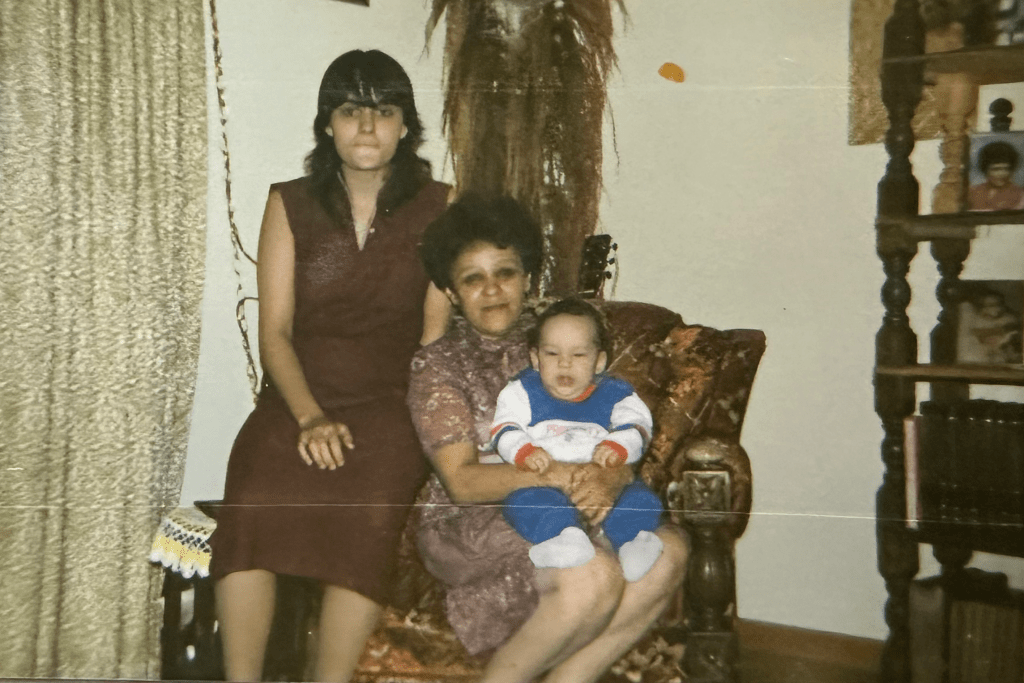
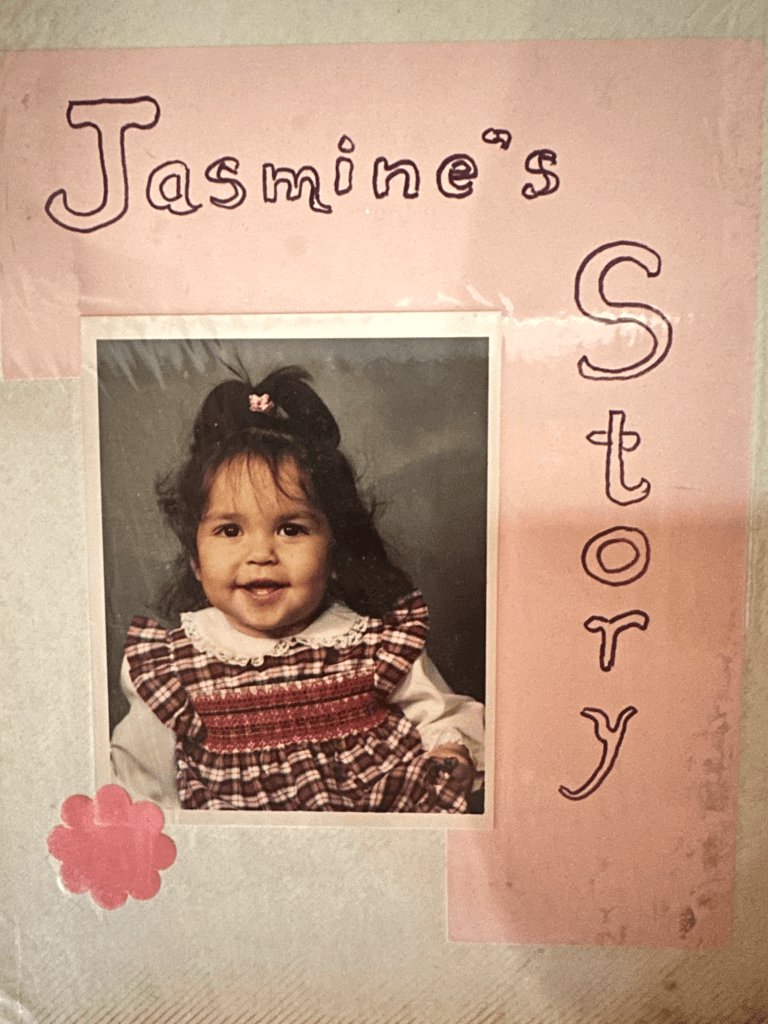
Image: Jas M. Morgan, age 1, Saskatchewan Child and Family document.
FOR IMMEDIATE RELEASE – March 24, 2025
SASKATOON, SK – Deadly Collective is standing with the Morgan (Saulteaux) and Ebach (née McKay, Cree-Métis) families to challenge the harmful interventions of Saskatchewan Child and Family Programs. Rooted in generations of lived experience, this effort seeks accountability for the lasting harm caused by child apprehensions and systemic discrimination. Representing seven family members across four generations, we are pursuing legal and community-based pathways to justice, calling for transformation in how Indigenous families are treated within Saskatchewan’s child welfare system.
Systemic Harm: Sixties and Millennial Scoop
Dr. Jas M. Morgan, a Saskatchewan foster care survivor and millennial scoop adoptee, unsealed their foster care records as an adult. They received 100+ documents, many redacted, that Saskatchewan Child and Family Programs never intended to be public.
Morgan shares their experience:
I was made a ward of the Minister of Social Services on August 23, 1988, under Section 13(2) of the Family Services Act, which allowed authorities to authorize medical examinations without parental consent. My apprehension was triggered by a birth alert placed on my medical records.
I was placed for adoption on December 13, 1988, just four months later. My adoption was finalized on May 31, 1989—less than a year after I was taken from my mother, with no effort made to reunite us. In adoptive care, I was sexually abused by a member of the adoptive family I was placed with.
Morgan’s mother, Jo-Anne Ebach, is a Sixties Scoop survivor and a Residential School survivor. She is the daughter of Granny Flora McKay, a founder of the Métis Nation of Saskatchewan.
Between approximately 1951 and 1984, an estimated 20,000 or more First Nations, Métis and Inuit infants and children were taken from their families by child welfare authorities and placed for adoption in mostly non-Indigenous households. This mass removal of Indigenous children from their homes, supported by a series of government policies, became known as the ‘Sixties Scoop’. (Indian Residential School History and Dialog Centre)

Image: Jo-Anne Ebach wins Miss Batoche, New Breed Magazine, August 1978, p.33.
Growing up in foster care, Ebach experienced abuse and was denied opportunities such as graduating high school. The barriers created by these experiences have shaped how she is able to navigate institutions like Saskatchewan Child and Family Programs, which have continued to intervene in her life and perpetuate her trauma. Yet, Ebach expresses that the unit has failed to provide her the support she would need to make kinship care successful and to move beyond the trauma.
Jo-Anne Ebach reflects:
I was a Sixties scoop kid and put into foster care and abused. Social Services took me from my mother to put me in a situation that was even worse. When I got older, my kids were taken away from me and put in foster care; and they were abused. So when does this stop?
Saskatchewan Child Welfare: Ongoing Harm
This call for accountability was sparked by the removal of Morgan’s cousin—who is their nephew in Cree kinship systems—from the safety of kinship care and his return to the system. Ebach spent years working to become his caregiver, as he is considered her grandson within Indigenous kinship structures.
Kinship Care is a long-standing tradition which involves relatives caring for other relatives. When children required an alternative placement they were cared for within the extended family and all family members participated in caring for these children. (Carrière-Laboucane, 1997)
The actions of the social worker overseeing Ebach’s grandson, the decisions of that social worker’s supervisor, and the inaction of management and administration were all marked by racism. The data used and the rationale behind his removal reflect systemic institutional discrimination, continuing patterns of violence that have impacted Indigenous families for generations. Ebach was criminalized due to systemic racism in Saskatchewan, which disproportionately targets Métis families. Her mannerisms and manners of speech as a racialized Métis woman were used against her.
Saskatchewan Child Welfare: Lack of Reform
In light of the collapse of the draft agreement to reform First Nations Child and Family Services—and Chiefs of Ontario’s decision to negotiate with the government without including other Indigenous communities in Canada—we observe a troubling trend. Many policy advocacy organizations, researchers, and governance bodies continue to frame child welfare issues through a lens centered on Ontario’s most populous regions, often overlooking the distinct realities of Prairie Indigenous communities. As a result, another generation of Métis children are getting lost in the system in Saskatchewan, and families lack essential support.
While Ontario has seen advancements in Native Child and Family Services, Saskatchewan Child and Family Programs has not undergone similar cultural shifts. Its policies and removal practices continue to mirror those that defined previous eras of widespread Indigenous child apprehension. The systemic failures and resulting violence inflicted on Indigenous youth and families by Saskatchewan’s child welfare system align with national and international research on social services data, which consistently shows that in many cases, policies and institutional culture have remained unchanged for generations (Walter, Kukutai, Russo Carroll, Rodriguez-Lonebear, 2021).
Image: Jo-Anne Ebach & Flora McKay, 1986
LEGAL SUPPORT
1
We are currently in discussions with potential legal counsel to support us in this lawsuit. If you are a lawyer and have expertise or interest in this area, we would welcome your support and input.
TAKE ACTION!
2
Advocate for Indigenous family-centered foster care and adoption reform in Saskatchewan! Native families and children in Saskatchewan cannot be represented by a single organization physically disconnected from our realities. Survivors need regional movements.
JOIN OUR MOVEMENT
3
We are calling out to any Métis families in Saskatchewan who have been impacted by Child and Family Programs Saskatchewan and previous iterations of the unit. Contact us, as we explore the possibility of expanding our action.
ABOUT US
Deadly Collective, an Indigenous policy research collective based in the School of Communication at Simon Fraser University, is facilitated by Dr. Jas M. Morgan. Our work supports community-led Indigenous governance that centers the leadership of Indigenous women, Two-Spirit, queer, and trans people across communities within unceded, Treaty, and modern Treaty lands in what is often referred to as Western Canada.
Media Contact
Jas M. Morgan, Facilitator, Deadly Collective
647 882 7831. jas_morgan@sfu.ca.
At Deadly Collective, we live and work on the unceded traditional territories of the Coast Salish peoples of the xʷməθkwəy̓əm (Musqueam), Skwxwú7mesh (Squamish), Səl̓ílwətaɬ (Tsleil-Waututh), and Kwikwetlem Nations.
 DEADLY COLLECTIVE
Leave a comment